

Are Shower Bases Really Popular in the US Market?
Confused about the US market’s stance on shower bases versus traditional tile? Specifying a custom tile shower might seem like the premium choice, but it often brings project delays and long-term risks.
Yes, shower bases are incredibly popular and their use is growing rapidly in the US market. Their popularity is driven by huge advantages in installation speed, cost savings, and superior waterproofing, making them a top choice for builders and homeowners alike.
Having spent my career in manufacturing and trading, I watch market trends closely. For a long time, the American market seemed to favor the hand-built, custom-tiled shower, seeing it as the peak of luxury. But tides change. A perfect storm of economic pressures, new material technologies, and evolving consumer desires has caused a massive shift. The shower base, once seen as a basic option, is now a sophisticated, smart choice that’s gaining serious ground across the United States. Let’s dig into why this is happening.
Why Are US Builders Switching to Shower Bases?
Are tight project schedules and a shortage of skilled labor hurting your bottom line? A custom-tiled shower can halt progress for days, waiting on a specialist whose schedule is already packed.
Builders are switching because shower bases drastically cut labor costs and installation time. A single plumber or contractor can install a base in a few hours, versus a specialized tiler taking multiple days, which accelerates project timelines and increases profitability.
If there’s one thing I learned running my own company, it’s that time is the most valuable resource. In the US construction industry, this is doubly true. There’s a well-documented shortage of skilled tradespeople, especially expert tile setters. This drives up their prices and makes them hard to schedule. For a large-scale builder, this is a major bottleneck. I remember consulting for a company building a large apartment complex in Texas. They switched from tile to SMC shower bases halfway through the project. The site manager told me it saved them an average of two full days per bathroom. It allowed them to finish the building weeks ahead of schedule, which is a massive return on investment.
The Cost of Complexity
For a designer like you, Jacky, understanding the full cost is critical. The price of a tiled shower isn’t just the tiles.
| Cost Factor | Custom Tiled Shower | Prefabricated Shower Base |
|---|---|---|
| Material Cost | Mortar, membrane, tile, grout, sealer | The single base unit |
| Labor Cost | Expensive, specialized tile setter (multiple days) | General contractor or plumber (a few hours) |
| Project Delay | 2-4 days of installation & curing | 2-3 hours of installation, no curing time |
| Risk Factor | High (human error in waterproofing, grout failure) | Extremely Low (single, factory-tested piece) |
By using a shower base, builders get predictability. They know the exact cost and the exact installation time. They can train their existing crews to do it quickly, eliminating the need to wait for a subcontractor. In a competitive market, that efficiency is a game-changer.
What Do US Homeowners Want in a Modern Bathroom?
Do your clients complain about how hard it is to keep their showers clean? Homeowners are tired of spending their weekends scrubbing moldy, discolored grout lines in their “luxury” tiled showers.
US homeowners increasingly want low-maintenance, hygienic, and accessible bathrooms. Shower bases meet these needs perfectly with their seamless, easy-to-clean surfaces and options for low-profile, barrier-free entry, aligning with modern design and aging-in-place trends.
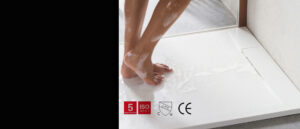
A design is only successful if it improves the client’s life. In the US, there’s a huge trend toward simplifying home life. People are busy, and they want spaces that are beautiful but also effortless to maintain. The shower is a prime example. The grout in a tiled shower is its biggest weakness from a homeowner’s perspective. It’s porous, so it traps soap scum and provides a perfect home for mold and mildew. This is a constant cleaning battle. A shower base has no grout lines. Its non-porous surface means a quick wipe is all it takes to keep it sparkling clean. It’s a simple, powerful benefit.
Designing for a Lifetime
Another major driver in the US market is the “aging-in-place” movement. People want to stay in their homes as they get older. This requires designs that are safe and accessible.
- Accessibility: Achieving a low-threshold or true, barrier-free, roll-in shower with tile is a complex and expensive construction task. It often requires cutting into the floor joists. With a modern, slim-profile shower base, it’s a standard, easy-to-install option. This makes it a go-to choice for accessible design.
- Safety: Many high-quality bases have an anti-slip texture molded directly into the surface. This provides a secure footing that won’t wear away like temporary coatings can.
These homeowner-focused benefits are just as important as the builder’s economic advantages. They are pulling the market toward shower bases just as hard as the builders are pushing for them.
How Have Materials Changed the Game for Shower Bases?
Do you remember the old, flimsy fiberglass shower bases that felt cheap and cracked easily? That outdated reputation can make you hesitate to specify a base for a high-end project.
Advanced materials like Sheet Molding Compound (SMC) have completely transformed shower bases. Unlike old fiberglass, SMC offers a solid, stone-like feel, superior durability, and incredible design flexibility for premium textures and ultra-low profiles.

This is where my passion for molding and materials really comes into play. The shower base of today is not the same product it was 20 years ago. The leap in material science is incredible. The old reputation for being “cheap” came from thin, flexible acrylic or fiberglass units that would creak and yellow over time. The innovation of SMC has changed everything. SMC is a high-strength thermoset composite, a mix of polyester resin, fillers, and integrated fiberglass. We manufacture it under immense heat and pressure.
A New Class of Product
This process creates a product that is fundamentally different and superior. For you as a designer, Jacky, understanding this difference is key.
| Feature | Old Fiberglass / Acrylic | Modern SMC (Sheet Molding Compound) |
|---|---|---|
| Feel & Sound | Hollow, flexible, can creak | Solid, stone-like, quiet |
| Durability | Prone to scratching & flexing | High impact and scratch resistance, very rigid |
| Design Options | Basic white, high thresholds | Rich colors, slate/stone textures, low-profiles |
| Repairability | Difficult to impossible | Often repairable like a solid surface countertop |
Because of the compression molding process we use for SMC, we can achieve incredible detail. We can create perfect slopes for drainage, integrated tile flanges for waterproofing, and beautiful, crisp textures that mimic natural stone. It allows us to produce a high-performance, premium product with perfect consistency every single time. This material evolution is why shower bases are no longer just a budget option; they are a premium design choice.
Conclusion
Shower bases are rapidly gaining popularity in the US. They provide massive time and cost savings for builders, while also delivering the low-maintenance, accessible, and modern style that American homeowners increasingly demand.