

Are Shower Bases with Walls a Cheap Compromise?
You see an all-in-one shower unit and think it’s a brilliant shortcut—no tiling, no grout, fast installation. But then you picture the flimsy, glossy plastic that yellows and cracks, and you know it will cheapen your entire design.
No, they don’t have to be. While traditional one-piece fiberglass units are a design compromise, a modern system pairing a high-performance SMC shower base with engineered wall panels offers a superior, waterproof, and stylish solution for professional projects.
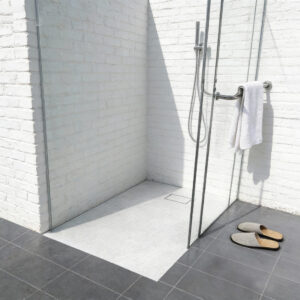
I’ve seen these one-piece units my whole career, usually in motels or budget renovations. The idea is great: create a seamless, waterproof box that’s easy to install. The problem was always the material. But technology has caught up with the idea. Today, from my factory floor, I see sophisticated, modular systems that deliver on that original promise without any of the old compromises. For a designer like you, Jacky, understanding this evolution from a cheap plastic box to an engineered composite system is key to designing better, faster, and more reliable bathrooms.
Why Do One-Piece Shower Units Look So Cheap?
You want the efficiency of an all-in-one system, but the image you can’t shake is of a thin, hollow-sounding plastic shell that flexes when you press on it. Why do they have such a bad reputation?
They look cheap because they are typically made from thin, low-quality acrylic or gel-coated fiberglass. These materials lack the premium matte finishes, sharp lines, and solid feel of modern composites like SMC, resulting in a flimsy and dated appearance.
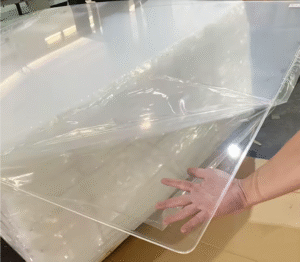

The cheap look comes directly from a cheap manufacturing process. Most of these units are made by thermoforming a thin sheet of acrylic or spraying fiberglass into a simple mold. This results in a hollow, lightweight part with large, rounded corners needed for structural support. The surface is unnaturally glossy and prone to scratching and yellowing over time. It feels and sounds hollow because, for the most part, it is. When I handle one of these, it feels like a large piece of packaging. When I handle a solid SMC tray, it has the heft and density of stone. That feeling of quality can’t be faked, and it starts with using a superior material and a better manufacturing process.
The Material Makes the Difference
|
Feature
|
Acrylic / Fiberglass Units
|
SMC Composite Components
|
|---|---|---|
| Manufacturing |
Thermoforming or low-pressure spray-up.
|
High-pressure compression molding.
|
| Material Feel |
Thin, hollow, and flexible.
|
Solid, dense, and rigid.
|
| Design Lines |
Must have large, rounded corners.
|
Can have sharp, precise, 90-degree corners.
|
| Surface Finish |
Limited to high-gloss plastic.
|
Rich matte, textured, or glossy finishes possible.
|
Is There a High-End Way to Combine the Base and Walls?
You want the waterproof security and installation speed of an integrated system, but your design demands the elegance of stone textures and minimalist lines. Is there a way to have both without compromise?
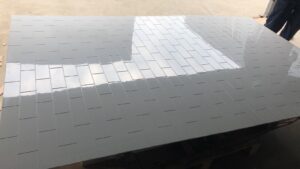
Yes. The solution is a modular system that combines a precision-molded SMC shower base with separate, interlocking wall panels. This approach delivers the waterproof benefits of an integrated unit while allowing for high-end aesthetics, textures, and design flexibility.
How Does an SMC System Make Installation Faster Than Tiling?
Your project timeline is tight. Tiling a shower is a multi-day process requiring a specialist, and any mistake in waterproofing can cause catastrophic failures down the road. How can you build a better shower, faster?
An SMC base and panel system drastically cuts installation time by replacing hundreds of individual tiles and grout lines with a few large components. It eliminates the complex, multi-day process of waterproofing, mud setting, tiling, and sealing, reducing labor costs and project delays.
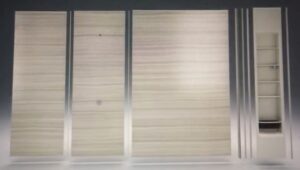
Let’s break down the work. A traditional tiled shower requires a master. You have to build a sloped mortar bed, apply a waterproof membrane, let it cure, apply thin-set, meticulously place each tile, wait, mix and apply grout, wait again, and finally seal the grout. It’s a week-long job with a dozen steps where something can go wrong. An SMC modular system is completely different. The SMC base already has the perfect slope molded in. The wall panels are large, covering an entire wall in one piece. Installation becomes a simple, predictable process: set the base in adhesive, apply adhesive to the walls, lock the panels into the base and to each other, and caulk the few remaining seams. It turns a week of skilled artisanal labor into a single day of straightforward assembly.
Tiling vs. SMC System: The Timeline
|
Traditional Tiling Process
|
Modular SMC System Process
|
|---|---|
|
1. Frame and prep
|
1. Frame and prep
|
|
2. Install waterproof membrane
|
2. Set SMC base in adhesive
|
|
3. Pour sloped mortar bed
|
3. Apply adhesive to walls
|
|
4. Wait for cure (24-48 hrs)
|
4. Mount wall panels
|
|
5. Apply thin-set & set tiles
|
5. Seal the few seams
|
|
6. Wait for cure (24 hrs)
|
Done in less than a day. |
|
7. Grout all lines
|
|
|
8. Wait for cure (24-72 hrs)
|
|
|
9. Seal grout
|
|
| Done in 5-7 days. |
Conclusion
Forget the cheap plastic box. A modern, modular system with an SMC shower base and engineered walls delivers superior aesthetics, faster installation, and guaranteed waterproof performance for any professional design project.