

Are Shower Trays Really Popular in the European Market?
Wondering if shower trays fit the sophisticated European aesthetic? You might think custom tile is king, but it often clashes with the modern, minimalist design trends dominating Europe.
Absolutely. Shower trays are the dominant choice in the European market. Their popularity comes from being incredibly space-efficient for smaller bathrooms, offering guaranteed waterproofing that meets strict regulations, and fitting perfectly with modern, minimalist design aesthetics.
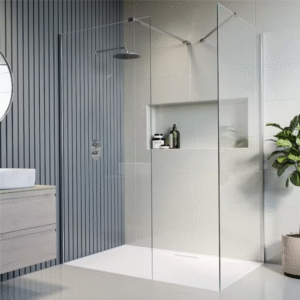
Having run a manufacture factory for years, I’ve shipped countless containers of bathroom fixtures all over the world. The difference between the North American and European markets is huge. In Europe, the shower tray isn’t just an option; it’s the standard. I’ve seen it firsthand at trade shows in Germany and Italy and in the project plans from my clients in France and Spain. The shower tray is a foundational piece of bathroom design driven by practicality, regulation, and a distinct design culture. Let’s explore why this is.
How Do Shower Trays Solve Europe’s Space Problem?
Struggling to fit a functional and beautiful shower into a tiny bathroom? European city apartments often have limited space, making traditional, bulky shower enclosures a design nightmare.
Shower trays are designed with space efficiency in mind. Their standardized, compact footprints and options like quadrant (curved corner) designs allow them to fit into tight spaces where a custom-built shower would be impractical, maximizing usability in smaller European bathrooms.
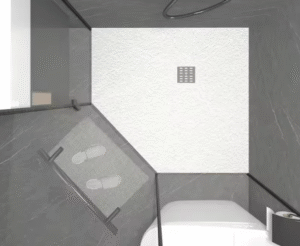
In my experience dealing with European developers, space is the ultimate luxury. Many people live in cities with beautiful, but old, buildings. The apartments are often smaller than what you’d find in a new Canadian suburb, and the bathrooms are particularly compact. As a designer like you, Jacky, this presents a real challenge. You can’t just knock down walls. You have to be clever with every square centimeter. This is where the shower tray shines. It’s a product born out of necessity.
The Power of the Footprint
The key is the efficiency of the form factor. European manufacturers have perfected trays in standard, space-saving sizes.
| Feature | Typical European Bathroom | Typical North American Bathroom |
|---|---|---|
| Avg. Size | 5-8 square meters (50-85 sq ft) | 10-15 square meters (100-160 sq ft) |
| Common Tray | 80x80cm, 90x90cm, Quadrant | 60″x32″ (152x81cm) Rectangular |
| Layout Goal | Maximize function in tight space | Create a spacious, spa-like feel |
A 90x90cm tray provides a comfortable shower without dominating the room. The quadrant shape, with its curved front, is a genius European invention. It tucks neatly into a corner, and the curved door doesn’t swing out into the limited floor space.
The Wet Room Concept
Even more, the ultra-slim shower trays, some just 2-3cm high, enable a “wet room” look. This creates a seamless, open-plan feel that makes a small bathroom appear much larger. Trying to create a perfectly sloped, fully tiled wet room floor in a small, old building is a complex, risky, and expensive job. A flush-mounted shower tray gives you that exact same high-end look with a fraction of the work and zero risk.
Why Do European Designers Love Shower Trays?
Trying to achieve that clean, minimalist look your clients love? Busy grout lines from a tiled shower floor can ruin the entire aesthetic, making the space feel cluttered and dated.
European designers favor shower trays because they provide a clean, monolithic surface that is central to minimalist design. Modern materials offer stone-like textures and custom colors, allowing the tray to be a seamless, integrated design element rather than just a functional base.
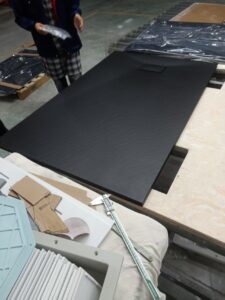
If you ever go to a major European design fair like Salone del Mobile in Milan or ISH in Frankfurt, you’ll see it everywhere. The focus is on clean lines, authentic materials, and eliminating unnecessary visual noise. I remember walking through the bathroom halls at ISH and being struck by how the shower tray was treated as a piece of furniture. It wasn’t just a white plastic base; it was a design statement. Grout lines are the enemy of this aesthetic. They create a grid that visually shrinks and complicates a surface. A shower tray offers a single, pure surface.
Material as a Statement
The materials themselves are a huge part of the appeal. We’ve moved far beyond basic acrylic.
- SMC & Resin Stone: These composite materials allow for incredible design freedom. We can mold them with textures that perfectly mimic slate, stone, or sand. The feel is solid and warm underfoot, not hollow or cold.
- Color Palette: While white is timeless, the modern European palette is all about matte, natural tones. Anthracite, cement grey, taupe, and even black shower trays are incredibly popular. They integrate perfectly with large-format porcelain wall tiles and minimalist fixtures.
The Beauty of Seamlessness
The ultimate goal for many high-end European designs is a completely flush, “level-access” shower. This is where the tray is installed perfectly level with the surrounding floor. It creates an unbroken floor plan that is both beautiful and highly accessible for people of all ages and mobility levels. For a designer, achieving this look with tile is difficult. You need perfect slopes and complex drainage solutions. With an ultra-slim shower tray, the perfect slope is already engineered into the product. It makes achieving this high-end, seamless look much simpler and more reliable.
How Do Building Standards Drive Shower Tray Adoption in Europe?
Worried about the long-term risk of leaks from a tiled shower? A tiny mistake in waterproofing can go unnoticed for years, leading to rot, mold, and incredibly expensive structural repairs.
Strict European building codes demand reliable, long-term waterproofing solutions. A factory-molded shower tray is a single, seamless, and pre-tested unit that guarantees a leak-proof installation, removing the risk of human error associated with multi-layer tiled shower floors.
| | Property | SMC | Acrylic | Ceramic | | ||||||||
| | Impact Resistance | Excellent | Poor | Very Poor | | ||||||||
| | Thermal Stability | -40°C to 180°C | Deforms at 70°C | Cracks at 120°C| | ||||||||
| | Chemical Resistance | High | Medium | Low | | ||||||||
| | Expected Lifespan | 30+ years | 5-10 years | 10-15 years | | ||||||||
This is a point that, as a manufacturer, I can’t stress enough. In Europe, especially in countries like Germany, liability is a huge deal. Builders and installers are held to extremely high standards. They simply cannot afford the risk of a leak. I worked with a German construction company that exclusively used shower trays for all their multi-family housing projects. The project manager told me, “I can’t inspect the work of every tiler on every layer of sealant. But I can trust a tray that came from a factory with a quality certificate.”
The German DIN Standard: A Case Study
In Germany, waterproofing for wet areas is governed by a strict standard called DIN 18534. To comply with this standard using tile requires a complex, multi-layer system applied by a certified specialist.
- Tiled Floor: Requires a primer, multiple layers of liquid waterproofing membrane, special sealing tapes for all corners and joints, and careful work around the drain. Any mistake creates a potential leak.
- Shower Tray: The tray itself is the waterproofing layer. It is a single, factory-produced component with no seams and no on-site application of membranes. The only seal is the plumber’s connection to the drain.
Minimizing On-Site Risk
For a builder, the choice is clear. A tiled shower floor has dozens of potential points of failure, all dependent on the skill and care of the installer on that particular day. A shower tray removes almost all of that on-site risk. It turns a complex waterproofing job into a simple installation and plumbing task. This guaranteed performance is a massive driver of adoption across the continent, where robust construction and long-term durability are valued above all else.
Conclusion
Shower trays dominate the European market because they are space-efficient, fit modern minimalist designs, and provide the guaranteed, regulation-compliant waterproofing that builders, designers, and homeowners demand.