

Can You Trust Google to Find Your Next SMC Shower Base Supplier?
Feeling lost in a sea of Google results for “SMC shower base”? It’s impossible to tell which sites belong to real factories and which are just clever middlemen in disguise.
Google is a powerful starting point, but it’s not enough on its own. The best results often belong to companies skilled at online marketing, not manufacturing. You must use it to build a preliminary list, then rigorously verify each supplier offline.

I’ve been using Google for sourcing since the early days of my company. Back then, it was simpler. Now, the first page of results is crowded with slick websites and aggressive advertisers. I’ve learned the hard way that a company’s search ranking has zero correlation with its product quality or reliability. Google is an incredibly powerful tool for creating a list of possibilities, but it is not a verification tool. You have to know how to use it safely to avoid the traps. Let’s break down how I separate the wheat from the chaff.
What Are the Real Risks of Only Using Google?
You found a beautiful website on page one of Google, and they look perfect. But are they a real factory, or a middleman charging you a hidden markup with no control over production?
The biggest risk is unknowingly dealing with a trading company disguised as a factory. They add a markup to the price, have no direct control over production quality, and can offer little support if problems arise.
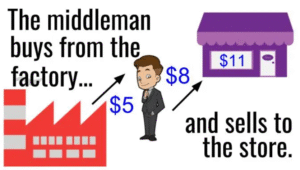
The number one thing to understand is that being good at Google (SEO and advertising) is a completely different skill than being good at manufacturing SMC. Factories invest their money in massive hydraulic presses, expensive steel molds, and skilled engineers. Marketing companies invest their money in web developers and ad budgets. Sometimes you find a factory that is good at both, but often you find marketers who don’t own a single machine. As a designer like you, Jacky, dealing with a middleman is a huge risk. They are just message-passers. If you need a slight change in texture or have a quality issue, they can’t just walk over to the production line and fix it. They have to call their factory, who might be serving dozens of other clients. You lose control.
| Feature | Real Manufacturer | Trading Company (disguised) |
|---|---|---|
| Price | Direct, most competitive | Higher (includes their hidden profit) |
| Product Knowledge | Deep, technical, engineering-level | Superficial, sales-focused |
| Quality Control | Direct, on-site, can solve issues fast | Indirect, relies on the factory’s QC |
| Problem Solving | Can fix production issues directly | Can only relay messages and complaints |
How Can You Spot a Real Manufacturer on Their Website?
Their website has professional photos and glowing testimonials, but these can be easily faked. How do you find the real clues that prove they are a manufacturer and not just an empty storefront?
Look beyond the glossy homepage. Check for an “About Us” page with factory photos, details about their SMC compression molding machines, and a physical factory address (not just a sales office). Real manufacturers love showing off their equipment.

This is where your detective work begins. A trading company’s website is designed to look like a manufacturer’s, but there are always cracks in the facade if you know where to look. I’ve reviewed thousands of supplier websites, and I’ve developed a quick checklist to see if they are the real deal. A real factory is proud of its infrastructure and its people. A trading company will hide the fact that they don’t have any.
The Factory Website Checklist
- “Factory Tour” or “Equipment” Page: This is a goldmine. A real SMC manufacturer will have photos and videos of their large hydraulic compression presses, their mold-making workshop, and stacks of raw SMC material. If a website has no pictures of its own factory, it’s a massive red flag.
- Product Specialization: Does the website specialize in molded composite products (like SMC, BMC, or FRP)? Or does it sell everything from shower bases to faucets to LED mirrors to towels? A real factory is highly specialized. A site that sells everything is almost certainly a trading company.
- “About Us” Page: Look for a real story and photos of the actual team and facility. Vague corporate language and generic stock photos of people in hard hats are signs of a fake.
- Check the Address: Find their address on the “Contact Us” page and paste it into Google Maps. Does the satellite view show a large industrial building with a factory roof? Or does it point to a small unit in a downtown office tower? The map doesn’t lie.
What Should You Do After Finding a Supplier on Google?
You’ve found a promising supplier on Google, and their website passed your inspection. Are you ready to send a purchase order? Taking that leap now could still be a costly mistake.
Treat your Google find as an unverified lead. The next step is to begin the real verification process: request their business license, ISO 9001 certificate, and most importantly, order a physical production sample for hands-on testing.
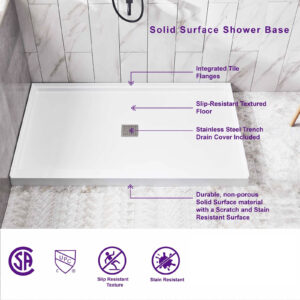
So you’ve done your online detective work and have a promising candidate. Great. Now, you need to move from the digital world to the real world. A good website proves they have a good web designer, nothing more. The real verification begins now, and it follows the same steps we discussed before. This is how you confirm that the quality they promise online is the quality you’ll get in your container.
I always tell my clients, the sample is the moment of truth. It is where the supplier’s promises meet reality. For a detail-oriented designer like you, Jacky, the sample is everything. It’s your chance to see if the slate texture is as crisp as it looked in the photos. It’s your opportunity to check that the color is consistent and the base is perfectly flat. No website, no matter how convincing, can give you that information. The Google search gets you to the starting line, but the offline verification process is how you win the race and secure a partner you can truly rely on.
Conclusion
Google is a great tool for generating leads, but it’s not a substitute for proper due diligence. Use it to find candidates, then use offline verification and sample testing to find a true partner.