

How Can You Find a Trustworthy SMC Shower Base Supplier?
Worried about choosing the wrong SMC supplier? A bad partner can deliver poor quality products, miss deadlines, and damage your project’s reputation before it even starts.
To find a trustworthy SMC supplier, use a multi-step process: start with B2B platforms and trade shows, verify their business licenses and ISO 9001 certification, demand a production sample for hands-on testing, and finally, request a factory video tour.
In my years of running a company, I learned a tough lesson very quickly: your business is only as strong as your supply chain. I’ve seen promising projects collapse because of a single unreliable supplier. Finding a partner you can trust, especially for a technical product like an SMC shower base, isn’t about luck. It’s about having a systematic process. You have to act like a detective, looking for clues, verifying evidence, and trusting your instincts, but only after you’ve done the hard work. Let me walk you through the exact process I use.
Where Should You Even Begin Your Search for Suppliers?
Is the thought of sifting through thousands of online suppliers overwhelming? You could waste weeks chasing dead ends or dealing with slick salespeople who can’t deliver on their promises.
Start your search on reputable B2B platforms like Alibaba and Made-in-China for a broad overview. For higher quality leads and to build real relationships, attend major industry trade shows like Canton fair in Guangzhou China other countries’ fairs . And searching in Google it is also a good way.

The search for a new partner starts with casting a wide net, but in the right fishing grounds. You have two main options, each with its own pros and cons. In my business, I use a combination of both. I start online to build a list of possibilities, and then I try to meet the most promising candidates in person. For a designer like you, Jacky, understanding both methods is key.
Online Platforms vs. In-Person Trade Shows
| Method | Pros | Cons |
|---|---|---|
| Online B2B Sites | Huge selection, easy to compare basic info, low cost | Hard to verify quality, language barriers, lots of “noise” |
| Industry Trade Shows | See the product, meet the team, build trust, direct Q&A | Expensive (travel/time), happens only once a year |
When I started, I spent countless hours on Alibaba. My tip is to use very specific keywords like “SMC shower base manufacturer,” not just “shower base.” Look for suppliers marked as “Verified” or with a high number of years on the platform. But nothing beats a trade show. I met one of my best partners at the ISH show in Frankfurt. Seeing their product quality and speaking directly to their engineers gave me a level of confidence I could never get from an email. It’s an investment, but for a long-term partnership, it’s worth it.
What Documents Should You Ask for to Verify a Supplier?
Is every supplier telling you they have “the best quality”? These are just words. You need proof, but it’s hard to know what to ask for to separate the professionals from the pretenders.
To verify a supplier, demand three key documents: their Business License to prove they are a real company, their ISO 9001 certificate for quality management, and product-specific certifications like cUPC for market access in North America.
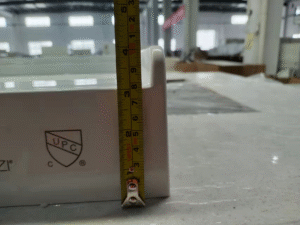
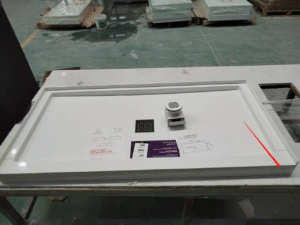
Once you have a shortlist of potential suppliers, the real vetting begins. This is where you move past their marketing claims and ask for hard evidence. I never proceed with a supplier until I have reviewed their core documents. It’s a simple step that filters out a huge number of unqualified factories right away. It tells me if they are a legitimate business that is serious about quality and meeting international standards. For you, Jacky, this is non-negotiable, especially with your work in Canada requiring specific compliance.
The Three Essential Documents
- Business License: This is the most basic check. It confirms they are a legally registered company and not just a person operating out of a garage. It should show their registered name, address, and scope of business.
- ISO 9001 Certificate: This is one of the most misunderstood documents. ISO 9001 does not certify product quality. It certifies that the factory has a documented quality management system. It means they have processes for controlling production, handling defects, and continuous improvement. A factory with ISO 9001 is organized and systematic, which is a very good sign.
- Product-Specific Certifications (e.g., cUPC): This is critical for you. The cUPC mark shows that the product has been tested by a third party and complies with the Uniform Plumbing Code used in the USA and Canada. Without this, your product cannot be legally installed. A serious supplier targeting the North American market will have this ready to show you.
Asking for these documents shows you are a professional buyer and forces the supplier to prove their legitimacy.
How Can You Confirm the Actual Product Quality Before Ordering?
Are the sample photos from the supplier absolutely perfect? Remember that anyone can take a good photo. Committing to a large order based on a picture is a massive gamble.
You must always request and pay for a full-size production sample. Once you receive it, perform your own quality control tests. Check for flatness, surface defects, color consistency, and durability to truly understand what you will be buying.
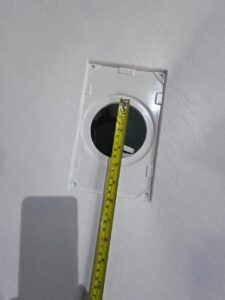
This is the most critical step in the entire process. Never, ever place a bulk order without getting your hands on a physical sample first. I learned this the hard way years ago with a batch of CNC parts that looked perfect in photos but were out of tolerance. For an SMC shower base, the details matter. You need to see and feel the product. When you request the sample, be specific. Ask for a “standard production sample,” not a specially prepared “golden sample.” You want to see what their average quality looks like.
Your Office QC Checklist
When the sample arrives, here’s what you do:
- Check for Flatness: Lay the base on a perfectly flat floor. Use a long straight edge across the top surfaces. Is it flat? A warped base is a nightmare for installers and a sign of poor molding process control.
- Inspect the Surface: Look at the finish under a bright light. Are there any small pits, blemishes, or dull spots? Is the texture crisp and uniform? For a slate texture, does it look and feel realistic?
- Test Durability: Don’t be afraid to abuse the sample; that’s what it’s for. Try to scratch it in an inconspicuous area with a car key. Does it mark easily? Put a drop of coffee or even black hair dye on it, let it sit for an hour, and see if it stains.
- Verify the Weight and Feel: Lift it. Does it feel solid and substantial, like stone? Or does it feel light and hollow? A good quality, high-mineral SMC product will be heavy and dense.
This hands-on inspection tells you more than a thousand emails or photos ever could.
Conclusion
Finding a great supplier is a disciplined process. By researching, verifying documents, testing physical samples, and inspecting their factory, you systematically reduce your risk and build a foundation for a successful partnership.