

Is a Cast Iron Shower Tray Still the Best Choice?
You value durability, so you default to the “old reliable”: cast iron. But its extreme weight makes installation a nightmare, its cold surface is a shock to the system, and its bulky design clashes with your modern aesthetic.
No, for modern projects, cast iron is an outdated choice. A high-performance SMC shower tray offers comparable durability with far superior design flexibility, user comfort, and installation ease, making it the smarter, more advanced professional choice for today’s bathrooms.
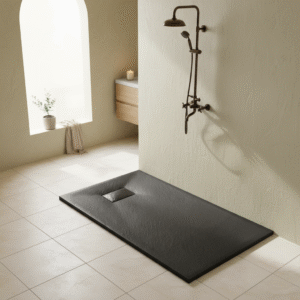
In my years in the molding business, I’ve seen trends come and go. Cast iron has been around forever. It’s a tank. But in design, “built like a tank” often means heavy, clumsy, and inflexible. When I see designers like you, Jacky, specifying shower trays for new, high-end projects, you’re looking for clean lines, warm textures, and smart functionality. You’re looking for what SMC delivers, not what cast iron is limited to. Let’s break down why the industry has moved on.
Is a Cold, Slippery Shower Floor a Good User Experience?
You’ve designed a beautiful, spa-like bathroom retreat. But the first thing your client experiences every morning is the icy shock of a cold floor, followed by the fear of slipping on a glassy surface.
Absolutely not. A cast iron tray’s cold, slick enamel surface is a major design flaw in terms of user comfort and safety. An SMC tray is naturally warm to the touch and can be molded with a built-in, anti-slip texture.
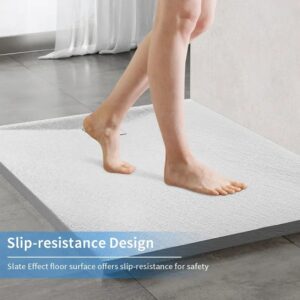
Think about the physics. A cast iron tray is a massive piece of metal. It’s a giant heat sink. It actively pulls warmth away from your feet, creating a jarringly cold experience, especially in the winter. The surface is coated in enamel, which is essentially fused glass. It’s hard and non-porous, but it’s also incredibly slippery when wet and soapy. In contrast, an SMC (Sheet Molding Compound) tray is a polymer composite. It’s an insulator, not a conductor, so it feels neutral and warm to the touch, just like the rest of your bathroom. More importantly, the high-pressure molding process allows us to create intricate, deep textures—like natural slate—directly into the surface of the tray. This isn’t a coating; it’s part of the tray itself, providing certified anti-slip performance and a much more pleasant tactile sensation.
Comfort & Safety: Head-to-Head
|
Feature
|
Cast Iron
|
SMC (Sheet Molding Compound)
|
|---|---|---|
| Thermal Feel |
Cold. Acts as a heat sink, drawing warmth away.
|
Warm. Acts as an insulator, feels neutral.
|
| Surface Finish |
Smooth, glossy enamel.
|
Can be matte, glossy, or textured (e.g., slate).
|
| Slip Resistance |
Naturally low. Relies on mats or applied decals.
|
High. Can be molded with certified anti-slip texture.
|
Can You Achieve a Modern, Minimalist Look with Cast Iron?
Your design calls for a seamless, low-profile wet room with sharp lines and a textured finish. You look at a cast iron catalog and find only thick, rounded trays with high curbs. Your design vision is dead on arrival.
It’s practically impossible. The manufacturing process of cast iron limits it to bulky, heavy forms with high curbs. The precision of SMC molding is what enables the ultra-thin profiles, sharp lines, and integrated textures required for modern minimalist design.
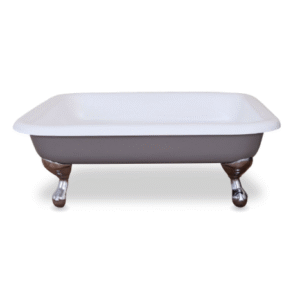
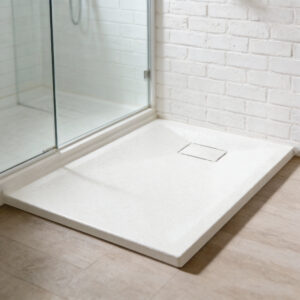
This difference comes down to how they are made. Cast iron is made by pouring molten metal into a sand cast. It’s a crude process by modern standards. It requires thick walls and large, rounded corners for structural integrity. You simply cannot cast iron into a thin, 3cm profile with sharp, precise edges. On top of that, its weight is a huge architectural constraint. A single tray can weigh over 100kg (220 lbs), often requiring floor reinforcement and a team of people to install. SMC, however, is forged in a precision-machined steel mold under immense pressure. This allows us to create trays that are incredibly strong yet incredibly thin. We can achieve the ultra-low profiles perfect for flush-to-floor, barrier-free installations. The edges are sharp and true, allowing for a perfect, clean seal with glass panels and tiles.
But Isn’t Cast Iron More Durable Than SMC?
You choose cast iron because you believe it’s indestructible and will last forever. But then a dropped perfume bottle chips the enamel, leaving a sharp, ugly black mark that you can never truly repair.
Not in a practical way. While the iron core is strong, its enamel surface is brittle and chips permanently. A high-quality SMC tray is engineered to be highly impact-resistant, and because its color is solid throughout, any potential damage is far less noticeable.

This is the key myth to bust. The “durability” of a cast iron tray lies in its iron core, but the surface you live with every day is the thin layer of enamel. This glass-like coating, while hard, is brittle. A sharp impact from a dropped tool or heavy bottle can easily chip it. The result is a sharp-edged black wound that exposes the raw iron beneath, which can then rust. Repairing chipped enamel is difficult and the patch is always visible. SMC, on the other hand, is a resilient composite. It’s tough and designed to absorb impact. And crucially, the color isn’t a thin coating; it’s mixed into the material and runs all the way through the entire tray. If you were to somehow get a deep scratch, you would see the exact same color underneath. This makes wear and tear far more graceful and less of a visual disaster.
Conclusion
Cast iron is a legacy material. For modern aesthetics, user comfort, and practical durability, SMC is the smarter, stronger, and more technologically advanced choice for any professional design project.