

Is Your Shower Tray Ruining Your Shower Door?
You spent a fortune on a beautiful, frameless shower door, but it constantly leaks and feels flimsy. You blame the door installer, but the real culprit is hiding in plain sight, right under your feet.
The best partner for a modern shower door is a high-performance SMC shower tray. Its rock-solid stability, precision-molded shape, and low-profile design create the perfect foundation that prevents leaks, wobbling, and aesthetic clashes, ensuring the door works exactly as intended.
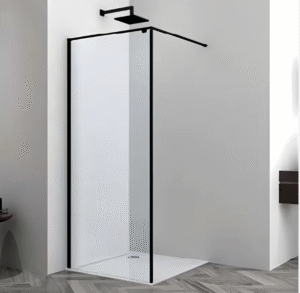
From my factory, I see designers specify premium shower doors all the time. They focus on the thickness of the glass, the quality of the hinges, and the finish of the handle. But many pair this expensive door with a cheap, flimsy acrylic tray. This is a recipe for disaster. It’s like putting the doors of a luxury car on a flexible, warped frame; they will never close properly. For a designer like you, Jacky, understanding that the tray and door are a system is the key to creating a shower that not only looks good on day one, but performs flawlessly for years.
Why Does My New Shower Door Already Feel Flimsy?
You’ve installed a heavy, high-quality glass door, but it feels unstable and the seals don’t line up. This isn’t just annoying; it’s a sign of future leaks and a failed installation.
Your shower door feels flimsy because it’s mounted on an unstable base. A standard acrylic tray can flex under weight, causing the entire door structure to shift. An SMC tray is incredibly rigid, providing a rock-solid foundation that keeps the door perfectly aligned.

The most critical job of a shower tray, when paired with a door, is to provide a stable, unchanging foundation. This is where SMC (Sheet Molding Compound) technology is a game-changer. Unlike an acrylic tray, which is a thin sheet of plastic with fiberglass sprayed on the back, an SMC tray is forged. It’s made from a composite material that is compressed under immense heat and pressure in a steel mold. The result is a single, incredibly dense and rigid piece. When you step on an SMC tray, it does not flex. This rigidity means the shower door frame or hinges attached to it stay exactly where they were installed. The door closes perfectly every time, the seals meet precisely, and the entire structure feels as solid as the wall it’s attached to.
Foundation Matters: Stability Comparison
|
Feature
|
Standard Acrylic Tray
|
High-Performance SMC Tray
|
|---|---|---|
| Composition |
Thin plastic sheet with fiberglass reinforcement.
|
Solid, high-density compression-molded composite.
|
| Under Weight |
Can flex, sag, and creak.
|
Rock-solid and flex-free.
|
| Impact on Door |
Causes door misalignment, seal gaps, and wobbling.
|
Maintains perfect door alignment and seal integrity.
|
| Long-Term Performance |
Flexing leads to sealant failure and chronic leaks.
|
Guarantees long-term structural stability for the door.
|
Does a High Curb Ruin the Look of a Frameless Door?
You chose a frameless door for its minimalist, open aesthetic. But now a bulky, high-curbed shower tray breaks that clean line and makes the whole design feel dated and clumsy.
Yes, absolutely. A high curb is the enemy of minimalist design. An SMC tray’s signature ultra-low profile is the perfect aesthetic partner for a frameless door, creating the seamless, zero-threshold look that defines modern bathroom luxury.
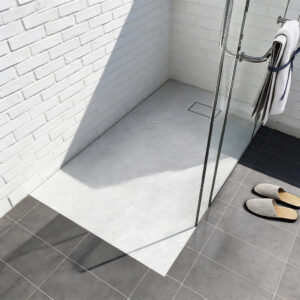
The entire point of a frameless shower door is to create a sense of openness and flow. You want the glass to almost disappear. A traditional shower tray with a 10cm or 15cm curb completely defeats this purpose. It introduces a clunky visual and physical barrier right where you are trying to create a seamless transition. This is where the design synergy between SMC trays and frameless doors is so powerful. Because SMC is so strong, we can mold trays that are incredibly thin—as low as 2.5-3cm. This allows for a “zero-threshold” installation that is flush with the bathroom floor. The frameless glass panel can rise directly from this continuous surface, achieving the pure, unbroken look that every high-end designer wants. The tray and door work together to achieve a shared goal of minimalism.
Where Do Shower Leaks Actually Come From?
You see water pooling outside the shower door and assume the door’s seal has failed. You caulk it again, but the leak always comes back, risking damage to your client’s floor and subfloor.
Many persistent leaks don’t come from the door seal itself, but from a poor interface between the door and the tray. SMC trays prevent this with two key features: a perfectly engineered slope for drainage and sharp, precise edges for a watertight seal.
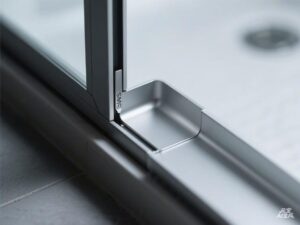
After years of troubleshooting products, I can tell you that water is lazy; it follows the easiest path. A leak at the door means there’s an easier path for water to get out than to go down the drain. SMC trays solve this in two ways. First, drainage. Every SMC tray is molded with a perfect, consistent slope that directs all water toward the drain. There are no low spots or flat areas where water can pool against the door’s bottom seal. Second, and just as important, is the edge. The high-pressure molding process creates incredibly sharp, true edges and corners. When you place a straight shower door frame against this perfect edge, you get a tight, gap-free connection. A cheap acrylic tray often has rounded, irregular edges, creating tiny gaps that rely entirely on a thick bead of silicone sealant, which is doomed to fail.
Conclusion
An SMC shower tray is the essential, unsung partner to a shower door. Its stability, low-profile design, and precision engineering ensure the door looks better, feels stronger, and stays leak-free for life.