

Which Corner Shower Pan is the Best Fit for Your Small bathroom?
You’re staring at a small or oddly shaped bathroom, trying to figure out how to maximize every inch without sacrificing style. A traditional rectangular shower pan just won’t cut it, creating wasted space and a cramped feeling.
The best corner shower pans efficiently utilize limited space while offering superior durability and aesthetics. Modern options, particularly those made from engineered composites like SMC (Sheet Molding Compound) or Solid Surface, provide precise shapes, seamless finishes, and easy installation, transforming awkward corners into functional, stylish shower areas.
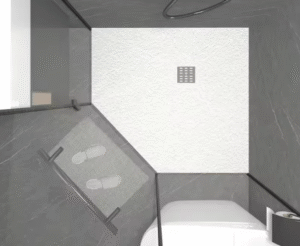
Throughout my years in the mold industry, I’ve seen countless challenges with bathroom layouts. Designers like you, Jacky, are always looking for smarter ways to use space. I remember one client who had a tiny ensuite bathroom. They thought they’d have to choose between a cramped shower or no shower at all. But by thinking about the corner, we opened up a world of possibilities. My work with MoldAll has taught me that the right product can solve even the trickiest spatial puzzles. Let’s look at how corner shower pans have evolved to become such an effective solution.
How Does a Corner Shower Pan Optimize Small Bathroom Layouts?
You’re struggling to fit all the essential fixtures into a tight bathroom, feeling like you have to compromise on shower size or flow. This makes the space feel cramped and less functional.
A corner shower pan uniquely optimizes small bathroom layouts by leveraging typically unused corner space. Its strategic placement frees up wall space, creates more open floor area, and allows for more flexible placement of other bathroom fixtures, significantly improving the overall functionality and flow.
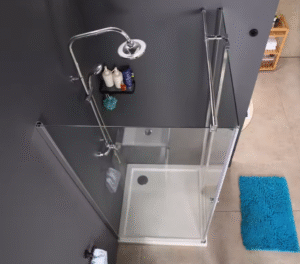
I’ve walked through so many new home builds and renovations where the bathroom felt like an afterthought. People often try to force a rectangular shower into a space that just doesn’t allow for it, making everything feel squished. This is where the corner shower pan truly shines. By fitting snugly into a corner, it effectively carves out a functional showering area without consuming valuable linear wall space. This means you have more room to place a vanity, toilet, or even just allow for more comfortable movement within the bathroom. Think about the common shapes: a quadrant pan, with its curved front, minimizes sharp edges and allows for a smoother traffic flow around the shower. A neo-angle pan cuts off the corner, creating an elegant, angled entry that also feels less bulky than a square. These specific designs are not just about aesthetics; they are about intelligent geometry. They take an otherwise dead or awkward corner and transform it into a highly efficient and visually appealing part of the bathroom. The goal is always to make the room feel larger and more open, and the corner pan is a powerful tool for achieving that, especially in compact homes or apartments where every square foot counts.
Corner Shower Pan Shapes and Their Benefits
| Shape | Description | Space Optimization Benefit | Aesthetic Impact |
|---|---|---|---|
| Quadrant (Curved) | Quarter-circle footprint, rounded front | Maximizes interior shower space, minimizes corner intrusion | Softens lines, modern, open feel |
| Neo-Angle (Angled) | Three flat sides, two short angled sides | Creates elegant entry, retains good interior space | Sophisticated, distinct, less bulky |
| Square | Equal sides, forms a perfect right angle | Most straightforward, maximizes internal standing area | Clean, classic, efficient |
| Pentagonal | Five sides (like Neo-Angle but larger) | Offers more interior room than Neo-Angle | Spacious, unique, high-end feel |
What are the Best Materials for a Long-Lasting Corner Shower Pan?
You want a corner shower pan that not only fits perfectly but also stands up to daily use without cracking, staining, or molding. This makes choosing the right material crucial for your clients.
The best materials for long-lasting corner shower pans are engineered composites like SMC (Sheet Molding Compound) and Solid Surface. These offer superior durability, complete non-porosity, and precise, factory-molded shapes that resist leaks, stains, and wear far better than traditional options like acrylic or custom tile.
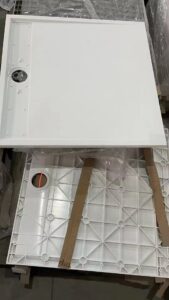
When I started MoldAll, one of my main goals was to ensure that the products we create solve common problems, not add to them. For corner shower pans, material choice is paramount. An inferior material will inevitably lead to headaches down the line—cracks in the corner, mold in the grout, or a pan that just feels flimsy. I’ve seen it all. Acrylic pans, while affordable, can scratch easily and sometimes lack the rigidity needed for a truly stable corner installation, potentially leading to leaks over time. Tiled pans, especially in corners, are notorious for challenging waterproofing; any slight movement or failing grout can compromise the integrity, leading to costly water damage behind the walls.
This is why engineered composites are my recommendation. SMC (Sheet Molding Compound) is fantastic for corner pans because it is molded under high heat and pressure, resulting in an incredibly dense and rigid product. This inherent strength means it won’t flex or crack, even in the stress points of a corner. It also allows for intricate, realistic textures directly molded into the surface, offering aesthetic versatility. Solid Surface, on the other hand, is a homogeneous, non-porous blend of resins and minerals. Its strength lies in its uniform composition and the ability to be seamlessly integrated with wall panels, creating a truly monolithic, waterproof corner shower. Both materials are non-porous, meaning they won’t absorb water, stain, or harbor mold. They are also through-body colored, so scratches are less noticeable, and the pan retains its look for years. The precision of factory molding ensures that the corner angles are perfect, making installation easier and guaranteeing a watertight fit—something that’s very difficult to achieve consistently with on-site tiling.
Material Properties for Corner Shower Pans
| Material | Durability | Non-Porosity | Aesthetic Versatility | Installation Ease | Maintenance |
|---|---|---|---|---|---|
| SMC (Composite) | Excellent (impact, rigidity) | Excellent | Realistic textures (stone, slate) | Easy (pre-formed, rigid) | Low (wipe-clean) |
| Solid Surface (Composite) | Excellent (repairable) | Excellent | Smooth, uniform, seamless integration | Easy (pre-formed, precise) | Low (wipe-clean) |
| Acrylic/Fiberglass | Good (prone to scratch) | Good (can flex) | Limited (shiny, smooth) | Easy (lightweight) | Moderate (scratch repair) |
| Custom Tile | Good (if installed well) | Poor (grout, tile) | High (design freedom) | Difficult (complex angles) | High (grout upkeep) |
Can a Corner Shower Pan Really Improve Accessibility and Simplify Installation?
You worry that installing a corner shower pan will be complicated, especially when aiming for a sleek, curbless look, or that it might compromise accessibility. This concern often limits your design choices.
Modern corner shower pans significantly improve both accessibility and ease of installation. Their factory-molded, precise dimensions eliminate complex on-site cutting and waterproofing issues common with traditional methods. Many are designed for curbless entry, removing barriers and offering a safer, more inclusive showering experience.
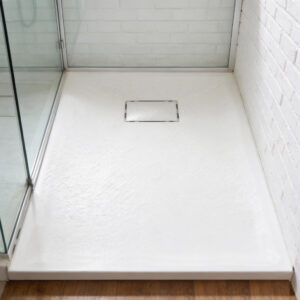
This concern about installation and accessibility is very real, Jacky. For years, custom-tiled corner showers were a nightmare for installers. Getting those angles just right, ensuring perfect slope for drainage in the tight corner, and guaranteeing waterproofing around all those seams was a huge challenge. I’ve seen many projects go over budget and schedule because of these complexities. But with modern, factory-molded composite corner pans, those problems largely disappear.
The precision of mold manufacturing means that every corner pan comes out with perfect angles and an integrated slope for drainage. This eliminates the guesswork and the need for complex, on-site custom work. The installation becomes a much simpler process: place the pan, level it, and connect the drain. This saves significant labor time and reduces the chance of installation errors that can lead to future leaks. Beyond installation, the design advancements in these materials directly impact accessibility. Many composite corner pans are available in low-profile or curbless designs. This means you can create a zero-entry shower, which is a massive benefit for clients seeking universal design. No curb means no tripping hazard, making it safe and easy for everyone – from children to the elderly, or those using wheelchairs or walkers – to enter and exit the shower. We can also incorporate subtle, anti-slip textures directly into the mold, enhancing safety without needing separate, often less attractive, add-ons. So, what used to be a challenging installation with potential accessibility issues has become one of the most practical and inclusive solutions available today.
Installation and Accessibility Features of Corner Pans
| Feature | Benefit for Installation | Benefit for Accessibility |
|---|---|---|
| Factory Molded | Precise angles, integrated slope, consistent quality | Guarantees proper drainage, reduces slip risks |
| Pre-formed Units | Faster install, fewer material variables, reduced labor | Ensures stable base for curbless entry, no wobbly sections |
| Low-Profile/Curbless | Simplifies subfloor preparation (for curbless) | Eliminates trip hazards, wheelchair friendly, easy access |
| Integrated Drain | No separate drain assembly, fewer leak points | Flatter surface, less interference for feet/wheels |
| Anti-Slip Texture | Molded-in, no additional application needed | Permanent grip, enhanced safety for all ages |
Conclusion
Choosing the best corner shower pan means selecting a solution that smartly uses space, offers lasting durability, and simplifies both installation and accessibility. Engineered composites like SMC and Solid Surface stand out, providing precise shapes, robust performance, and a sleek aesthetic that transforms any corner into a functional, beautiful shower.